Leg health
When diet and exercise change everything except the legs
Lipedema is a recognized fat disorder that is often mistaken for ordinary weight gain. Here is what it is, how it differs from other conditions, what care looks like today, and where a supplement like Lymphalive fits (and where it doesn't).
Many women describe the same frustrating pattern. They eat carefully and stay active for months. Their face, arms and waist get slimmer, but their hips and legs barely change. The legs feel heavy by the end of the day, ache when touched and bruise without an obvious reason. And for years, the advice they hear is the same: eat less, move more.
For some of these women, there is a name for what is happening: lipedema.
What lipedema is
Lipedema (also spelled lipoedema) is a long-term condition in which fat builds up in an unusual way, usually in both legs and sometimes in the arms.1 It affects almost exclusively women and often begins or gets worse around times of hormonal change, such as puberty, pregnancy or menopause.3
The exact cause is not clear. The UK's National Health Service notes that it may be linked to hormone changes, that it can run in families, and that it is not caused by being overweight.1
How common is it? Nobody knows for sure. Published estimates range from 1 in 72,000 people to as many as 11% of women, largely because lipedema is so easily mistaken for obesity or lymphedema.2
Signs that are often described
- Both legs are affected in a similar, symmetrical way.
- The fat tends to stop at the ankles, so the feet look normal by comparison. This is sometimes called a "cuff."
- The legs feel heavy, achy or tender, and can hurt when pressed or squeezed.
- Bruises appear easily.
- The tissue may feel lumpy underneath, like small pebbles under the skin.
- Diet and exercise slim the upper body much more than the legs.
These descriptions come from the patient-education sources listed at the end.1–3 They are not a diagnosis. Leg swelling and pain have many possible causes, and only a qualified clinician can tell what is going on.
When to get help right away: if one leg suddenly becomes swollen, painful, warm or red, or if swelling comes with shortness of breath or chest pain, seek urgent medical care. These can be signs of a blood clot or another condition that needs prompt treatment.
Lipedema, lymphedema or weight gain?
The three are often confused. A simplified comparison:
| Lipedema | Lymphedema | General weight gain | |
|---|---|---|---|
| Who | Almost always women | Anyone | Anyone |
| Where | Both legs, sometimes arms; symmetrical | Often one limb, can be both | Whole body, including the waist |
| Feet and hands | Usually spared | Often swollen | Can be affected |
| Tender to touch | Common | Usually not | Usually not |
| Easy bruising | Common | Not typical | Not typical |
| Response to diet | Legs change little | Swelling is fluid, not mainly fat | Usually responds |
For general education only. The conditions can overlap, and lipedema can lead to lymphedema over time.2,4
It is not a matter of willpower
One of the hardest parts of lipedema is the blame. Many women spend years being told they just need more discipline. Yet lipedema fat is known for responding poorly to diet and exercise compared with ordinary fat.3
That doesn't make healthy habits pointless. Eating well and staying active support overall health, help prevent additional weight gain and are part of standard care.1,4 But when the legs don't change the way the rest of the body does, that is not a personal failure.
What care looks like today
There is no cure for lipedema, but there are ways to manage it.1 Care is tailored by a clinician and may include:1,4
- Compression garments, ideally fitted by a professional, to ease pain and heaviness.
- Manual lymphatic drainage, a gentle massage technique performed by trained therapists.
- Regular, low-impact movement such as walking, swimming, water exercise or cycling.
- Balanced eating and weight management, to avoid gaining additional fat.
- Skin care and emotional support, including counseling.
- Specialized liposuction for some people, performed by experienced surgeons.
If this sounds familiar, a good first step is a conversation with a doctor and, where possible, a clinician experienced with lipedema. The Lipedema Foundation keeps educational resources for patients and clinicians.3
Where Lymphalive fits, and where it doesn't
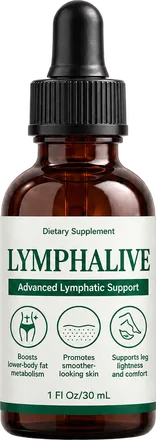
Lymphalive is a liquid dietary supplement sold in a 1 fl oz (30 mL) dropper bottle. Its label calls it "Advanced Lymphatic Support" and says it is made to support leg lightness and comfort.*
Here is what it is not:
- It is not a medicine, and it is not a treatment or cure for lipedema or any other disease.
- It does not replace compression, therapy or anything a clinician recommends.
- Its label statements have not been evaluated by the U.S. Food and Drug Administration. The FDA does not approve dietary supplements for safety or effectiveness before they are sold.5
Some women choose to add a supplement to a routine that already includes the care above. If you are considering it, talk to a healthcare professional first, especially if you are pregnant or nursing, take any medication or have a medical condition. Read the label and follow its directions.
Results vary from person to person, and some people notice no difference at all. That is why the manufacturer's money-back guarantee is worth knowing about before you order.